Israel says ready to attack Iran for 'third time if necessary'
Israel’s defence minister Israel Katz on Thursday said his country was prepared to resume its military campaign against Iran if needed, vowing to do so “with even greater force”.
“The army is ready and on alert for a resumption of fighting, in order to regain air superiority and strike again ... in Iran, to eliminate threats, including a third time if necessary.If we have to go back, we will go back, with even greater force,” he said at a military ceremony.
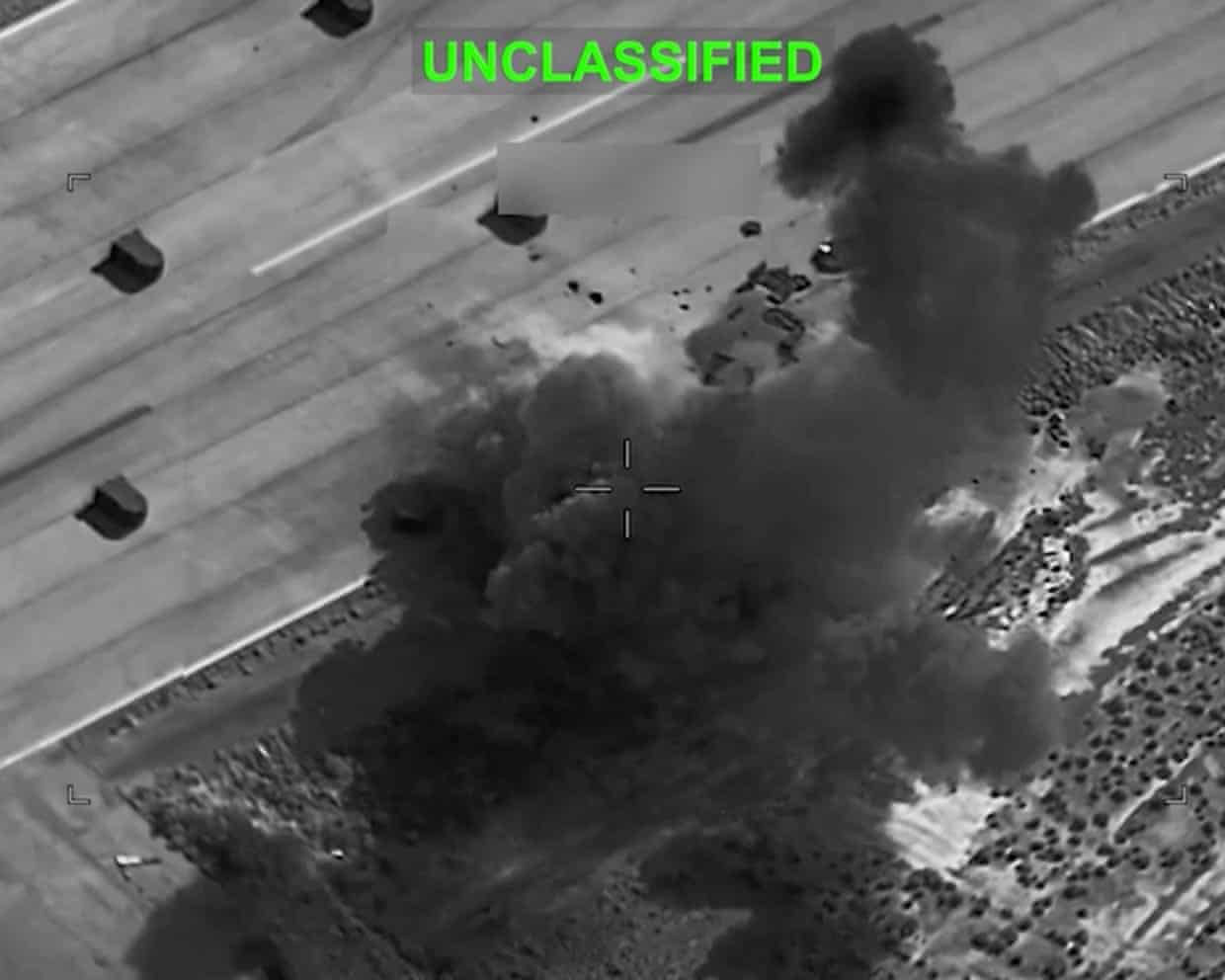
Iran accused the US of launching a strike near its only civilian nuclear plantas renewed hostilities continued between the warring parties for a second day. Iranian media reported several explosions in the Bushehr province in southern Iran, including near the nuclear power plant located in the provincial capital of the same name. Local officials said there were no reports of casualties.
Iranian authorities also said that US overnight strikeshit three railways bridges, including one on a line that connects the capital Tehran to the north-eastern city of Mashhad.
Thousands of people have gathered there where the assassinated former supreme leader Ali Khamenei will be buried at the Shrine of Imam Reza. It follows a week of mass funeral processions around Iran and Iraq that has coincided with the fresh bout of fighting with the US. In the enormous crowds, a massive banner reading “We Will Kill Trump” was pulled along by mourners, and there have been many chants of “Trump, we will kill you” and “death to America”. See here and here for more.
The recent wave of US strikes in Irankilled 14 people and injured 78 others, the Iranian health ministry said. “Of the injured, 47 remain hospitalised,” said the head of public relations for Iran’s ministry of health.
Tehran responded with retaliatory strikes against what it described as US bases across the Gulf, including inBahrain, Qatar, Kuwait and Jordan. A US official told AFP on Thursday that the dozens of missiles and drones fired by Iran caused no significant damage or injuries to US personnel.
Meanwhile, Israel’s defence minister Israel Katz said his country was prepared to resume its military campaign against Iran if needed, vowing to do so “with even greater force”. Benjamin Netanyahu also said Iran had been weakened by the two previous military campaigns Israel launched against it, but he also said “the campaign is not over”.
Iran’s Islamic Revolutionary Guard Corps (IRGC) navy said that US attacks on Iran and intervention in redirecting shipping through the strait of Hormuz were disrupting the strategic waterway’s gradual reopening and jeopardising the interests of countries benefiting from it.
Further to my previous post on Israel Katz’s comments about Israel being ready to resume its military campaign against Iran for a third time “if necessary” and vowing to do so “with even greater force”, Benjamin Netanyahu also spoke at the ceremony.
The Israeli prime minister said Iran had been weakened by the two previous military campaigns Israel launched against it, but he also said the conflict was not yet over.
The Iranian axis is weaker than ever before, while Israel is stronger than ever before. We proved that the long arm of the Israeli Air Force can reach anywhere, from Yemen to Iran. Yet we must also acknowledge that the campaign is not over.
Dozens of missiles and drones fired by Iran caused no significant damage or injuries to US personnel, a US defense official has told AFP.
The Iranian missiles and drones “were intercepted or failed to cause major damage”, the official said on condition of anonymity, adding that there were “no US injuries”.
Israel says ready to attack Iran for 'third time if necessary'
Israel’s defence minister Israel Katz on Thursday said his country was prepared to resume its military campaign against Iran if needed, vowing to do so “with even greater force”.
“The army is ready and on alert for a resumption of fighting, in order to regain air superiority and strike again ... in Iran, to eliminate threats, including a third time if necessary.If we have to go back, we will go back, with even greater force,” he said at a military ceremony.
US and Iran exchange strikes: is Trump's peace deal over? - podcast
Donald Trump has said the truce with Iran is “over” amid 48 hours of intense strikes.
In the days leading to this escalation, three tankers were attacked by Iran in the strait of Hormuz, raising questions about the clarity of the ceasefire agreement signed in June.
The US military’s attacks occurred during the week-long funeral of Iran’s former supreme leader Ali Khamenei, which drew millions on to the streets.
In today’s episode of The Latest podcast, Lucy Hough unpacks it all with the Guardian’s senior international correspondent Julian Borger.
US and Iran exchange strikes: is Trump’s peace deal over? | The Latest
Per my last post, the funeral procession of Iran’s assassinated former supreme leader Ayatollah Ali Khamenei approached the country’s holiest shrine for his burial on Thursday with a massive banner reading “We Will Kill Trump” pulled alongside in the enormous crowd.
Thousands of mourners surround the convoy carrying the coffins of Iran's slain supreme leader Ali Khamenei and members of his family, before he is buried at the Shrine of Imam Reza. Photograph: Atta Kenare/AFP/Getty Images
As a week of funeral events reaches its culmination, Khamenei’s son and successor Mojtaba Khamenei is still hidden from public view after being injured in the strike that killed his father.
Khamenei’s body was carried by truck slowly through the crammed Mashhad streets towards the gilt dome and minarets of the Shrine of Imam Reza, flanked by white-turbaned clerics. Black-clad mourners pressed in close behind, waving Iranian flags, photographs of the late Khamenei and red placards with revolutionary slogans.
Hostilities with the United States burst out again this week despite a truce, with Iran still controlling the vital strait of Hormuz waterway and proclaiming its victory in having survived a months-long assault by its most powerful enemies.
The whereabouts of Mojtaba Khamenei, proclaimed supreme leader by a clerical assembly a week after his father’s death, has remained a mystery to Iranians. He has not appeared in public since the war began with the strike that killed his father on 28 February, and while he has issued written statements, no image or video or voice recording of him has been issued.
He suffered debilitating injuries in that same strike, his face disfigured and limbs badly wounded.
Senior sources in Tehran have told Reuters he is recovering but that he has not yet been well enough to manage public appearances and state security services are also trying to limit his exposure in case of more US attacks.
Mourners hold a banner reading ‘We will kill Trump’, seeking revenge for the US-Israeli assassination of the former supreme leader. Photograph: Alkis Konstantinidis/Reuters
As crowds jostled in Mashhad awaiting Khamenei’s funeral cortege, the crowd chanted slogans demanding revenge on Donald Trump for his killing.
“I swear by the blood of the supreme leader, Trump, we will kill you!” they shouted, with women holding up placards reading “Kill Trump”.
Mourners gather around a vehicle transporting the coffin of Ali Khamenei in a culmination of a mass funeral. Photograph: Majid Asgaripour/Reuters
The roads leading to the shrine were a sea of black-clad mourners on Thursday, some responding to shouted chants in praise of Khamenei and against Iran’s enemies, including the old revolutionary slogan of “Death to America”.
As the crowds awaited the coffins of Khamenei and his family in the sweltering July heat, hoses pumped water high into the air to spray across the mourners and keep them cool. Khamenei’s remains, along with those of four family members killed alongside him, have already been paraded through Tehran, the Shi’ite Muslim clerical centre of Qom, and the Iraqi shrine cities of Najaf and Karbala. At each event, huge crowds have thronged the streets to the mournful accompaniment of sung Shi’ite laments and chanted revolutionary slogans.
Crowds of mourners are sprayed with water to keep them cool as they attend Ali Khamenei’s funeral procession. Photograph: Atta Kenare/AFP/Getty Images
Thousands of mourners surround the convoy carrying the coffins of Iran’s former supreme leader Ali Khamenei and members of his family for the final funeral procession before he is buried at the Shrine of Imam Reza, Iran’s most revered place of worship, in his hometown of Mashhad, northeast Iran, on Thursday.
Crowds brave sweltering heat for Ali Khamenei’s funeral procession in Mashhad. Photograph: Atta Kenare/AFP/Getty Images
Mourners react next to the coffin of Khamenei, who was killed on 28 February in US-Israeli airstrikes that launched the war. Photograph: Alkis Konstantinidis/Reuters
A truck carrying the coffins of Ali Khamenei and members of his family moves during the final stage of funeral ceremonies in Mashhad. Photograph: Hasan Salavati/AP
Iran’s foreign minister Abbas Araghchi held separate phone calls with his Omani and Turkish counterparts on Thursday and discussed latest developments in the region, particularly in the strait of Hormuz, the Iranian foreign ministry said.
The parties stressed the need to use diplomatic channels to prevent escalation, a ministry statement said.
Wall Street and oil prices are holding steadier on Thursday in the wait to see what will come next after Donald Trump declared the truce in his war against Iran “over” and the two sides exchanged tit-for-tat strikes.
The S+P 500 rose 0.2%, even though the United States launched new airstrikes against Iran, which responded by targeting US allies in the region. The Dow Jones Industrial Average was up 71 points, or 0.1%, as of 10:15am ET, and the Nasdaq composite was 0.2% higher.
In the oil market, prices edged lower following their jumps from the day before. The price for a barrel of Brent crude, the international standard, fell 0.7% to $77.45. That’s down from $78.02 the day before but still above its $71.80 price at the end of last week.
There is concern that a return to full-blown war will block oil tankers from the strait of Hormuz and prevent the delivery of crude from the Persian Gulf to customers worldwide. That could worsen inflation, which economists expected would ease with oil prices, and in turn force the US Federal Reserve and other central banks to raise interest rates.
Higher rates can keep a lid on inflation, but they also slow the economy and hurt prices for all kinds of investments.
But Trump also said on Wednesday that the latest back-and-forth fighting would not result in “long-term” military action, raising uncertainty about just what will happen.
The swings for oil prices have halted what had been a steady decline in US gasoline prices, and the cost for a gallon climbed a nickel overnight, according to motor club AAA. The average price for a gallon of regular gasoline was $3.85 on Thursday, up 68 cents from a year earlier.
Iran has accused the US of launching a strike near its only civilian nuclear plant as renewed hostilities continued between the warring parties for a second day.
Iranian media reported several explosions in the Bushehr province in southern Iran, including near the nuclear power plant located in the provincial capital of the same name. Ehsan Jahanian, a local official in Bushehr, said there were no reports of casualties.
Iranian authorities also said that US overnight strikes hit three railways bridges, including one on a line that connects the capital Tehran to the north-eastern city of Mashhad.
Massive crowds of people have gathered in Mashhad where the slain supreme leader Ali Khamenei will be buried. It follows a week of funeral processions around Iran and Iraq that has coincided with the fresh bout of fighting with the US.
People carry a banner against US president Donald Trump as they gather for the burial of Iran's late supreme leader Ali Khamenei in Mashhad, Iran. Photograph: Alkis Konstantinidis/Reuters
The recent wave of US strikes in Iran have killed 14 people and injured 78 others, the Iranian health ministry said. “Of the injured, 47 remain hospitalised,” said Hossein Kermanpour, head of public relations for Iran’s ministry of health.
Tehran responded with retaliatory strikes against what it described as US bases across the Gulf, including in Bahrain, Qatar, Kuwait and Jordan.
Iran’s Islamic Revolutionary Guard Corps (IRGC) navy said that US attacks on Iran and intervention in redirecting shipping through the strait of Hormuz were disrupting the strategic waterway’s gradual reopening and jeopardising the interests of countries benefiting from it.