
A hoard of pennies linked to Harold II and most likely buried on the eve of battle in 1066, a rare Roman vehicle fitting, and a group of early medieval objects are among the archaeological finds and treasure discovered in England, Wales and Northern Ireland in 2024.
It was a record-breaking year for archaeological and treasure finds, with the highest number recorded in a single year – thanks in large part to metal detectorists.
Figures released by the British Museum on Tuesday showed finds reported by the public accounted for 94% of the total, marking a significant increase over the past three years.
Metal detecting has surged in popularity, and the museum said the finds demonstrated the contribution made by members of the public to documenting and preserving the nation’s history.
The museum showcased some of the most exceptional recent discoveries, including the hoard of 179 silver pennies, probably buried on the eve of battle in 1066. It is one of several hoards deposited during the 1060s, a period of significant political turmoil, but this find contained only coins from Harold II’s short reign.

The museum said one possibility is that the hoard was deposited late in Harold’s rule, buried around the time of the Norwegian invasion of England in September 1066 by King Harald Hardrada. Harald is known to have briefly captured York after a battle at Fulford, only a short distance from where the hoard was found.
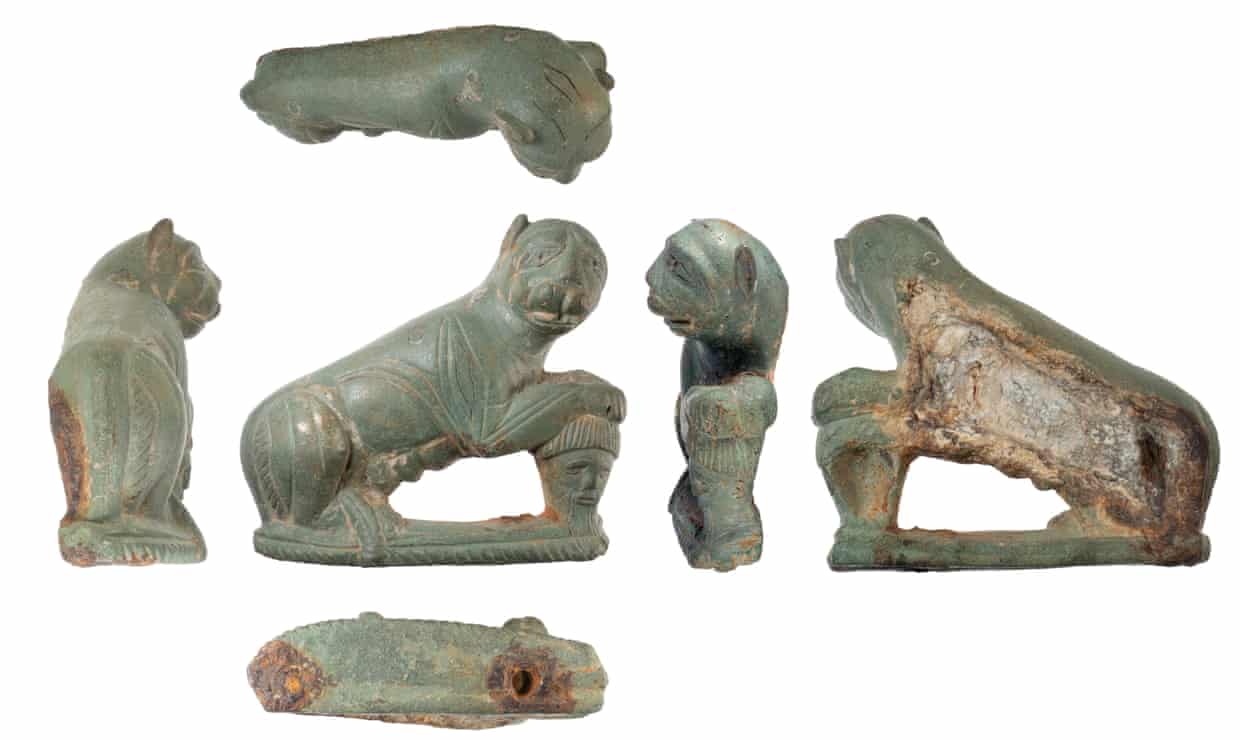
Also on display was a complete copper-alloy Roman vehicle fitting probably dating from about AD43 to AD200, which was discovered by a detectorist in Essex. The museum said vehicle fittings of this type were rare in Britain, and it was probably attached to the body of a carriage or wagon or to the yoke that hitched draught animals to the vehicle.
The final showcased finds were a number of early medieval precious metal objects found in plough soil in Wiltshire. These included a silver, gold and garnet bird’s-head terminal with elephant ivory inlays, possibly from a drinking-horn, several gold rings and other metal objects.
The pieces were discovered by detectorists metres apart and may form part of a high-status early medieval burial. Together, they provide a window into elite lifestyles and international connections during the period. A follow-up excavation will be led by Cardiff University and the Portable Antiquities Scheme [PAS] in the coming months.
Dr Nicholas Cullinan, the director of the British Museum, said the PAS and Treasure process were “vital tools for preserving and recording Britain’s past, ensuring that remarkable discoveries made by the public are protected, studied and made accessible to everyone”.
In total, there were 79,616 finds recorded in 2024, up from 74,506 in 2023 and 53,490 in 2022, and 1,540 treasure cases were reported in England, Wales and Northern Ireland during 2024, representing an increase of 163 on the previous year.
According to the Treasure Act 1996, treasure is defined as any metallic object, other than a coin, provided that at least 10% by weight is precious metal (gold or silver) and that it is at least 300 years old.
The counties recording the most PAS finds were Norfolk (7,120), Suffolk (5,410), Lincolnshire (5,133) and Gloucestershire (5,034), all agricultural counties known to have a rich archaeological heritage. During the same period, Norfolk (138), Hampshire (110) and North Yorkshire (109) recorded the highest numbers of treasure finds.
More than 92% of objects were recovered from cultivated land, where archaeological material is especially vulnerable to agricultural damage.
Ian Richardson, the acting head of portable antiquities and treasure at the museum, said the continued rise in the number of finds was a “testament to the dedication of finders across the country”.
He added: “Their responsible reporting allows us to build a richer and more detailed picture of life in the past, while ensuring that important objects are preserved for public benefit.”


