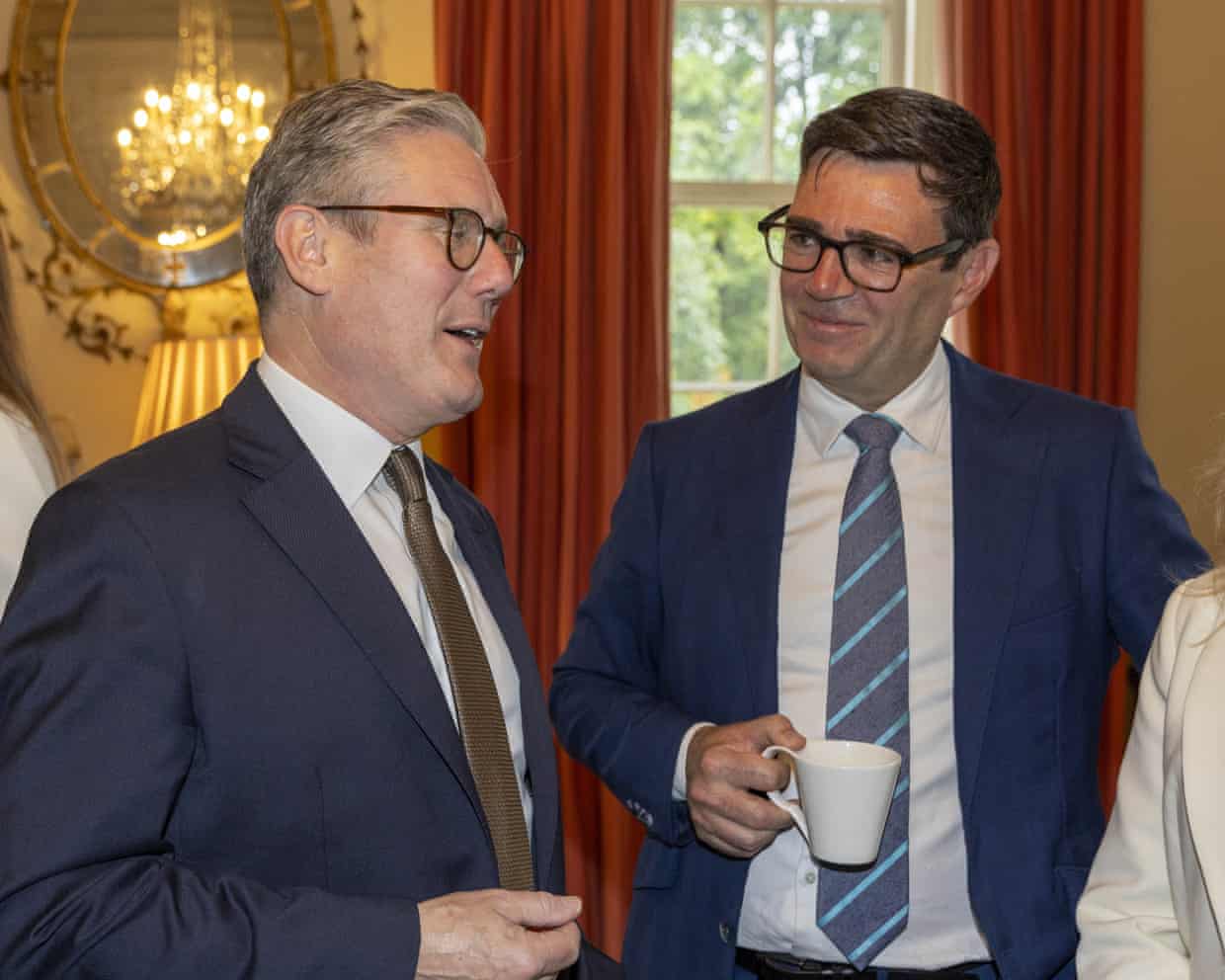
When Lucy Powell, Labour’s deputy leader and a close ally of Andy Burnham, took to the stage at the Fabian conference in London on Saturday, she had a blunt message for her party.
“I want to make sure that we’re putting out the best team on the pitch, week after week, so we can win those important matches,” she told the audience.
“I don’t want to see [footballer Erling] Haaland on the bench because there’s been some falling out,” the lifelong Manchester City fan said.
“But I’m also going to get behind Pep Guardiola as our manager and make sure that we win matches, win those crucial matches, and go on to win the league. I think we can do that.”
With Labour flagging in the polls, Keir Starmer under pressure and unpopular domestically, and dozens of MPs worried about hanging on to their seats at the next election, the view that the party should have its best players on the pitch is one widely shared.
But the question pondered by many inside Labour on Saturday, as they whiled away the long hours until the 5pm deadline for Gorton and Denton byelection applications, was whether Andy Burnham sees himself as the star striker on the team, or its captain.
Burnham is fully aware that many will see his return as just the first step in his plan to take over from Keir Starmer as leader. In his letter to Labour’s ruling national executive committee (NEC), posted on social media at 5pm on the dot, Burnham confronted that head on.
“I would be there to support the work of the government, not undermine it, and I have passed on this assurance to the prime minister,” he wrote.
But does anybody believe him? Within moments of the byelection being confirmed last Thursday, Starmer’s allies had already launched a “Stop Andy” campaign to prevent the Labour mayor from returning to parliament.
With the party machinery tightly controlled by Morgan McSweeney, Starmer’s chief of staff, it may look as though it would be an all but impossible task for Burnham to make it past the NEC to run.
Party insiders point to the cost of a mayoral byelection campaign in Greater Manchester, which would mean that about £500,000 of party funding was diverted from other races across Britain. “That alone should be enough to say no,” said one NEC source.
Burnham’s insistence that he would be a team player has, unsurprisingly, been meet with scepticism in some quarters.
“If anyone believes he’s doing it to support rather than undermine the government, I have a bridge to sell them. The NEC should just make the argument that we all know what Andy is up to and they won’t stand for it,” one minister said.
Several Labour MPs drew parallels to Boris Johnson, who re-entered parliament in a byelection while still London mayor, while denying it was the start of a campaign to get into Downing Street. Once elected, he spent years undermining subsequent prime ministers before he achieved his aim.
Yet there is a powerful lineup of party figures on Burnham’s side. They include Lucy Powell, her predecessor Angela Rayner, the former leader Ed Miliband, the London mayor Sadiq Khan, the two biggest unions, numerous MPs and party members. There would be significant disquiet if he was blocked.
The NEC is not, of course, his only hurdle. He would actually have to win the seat – potentially facing Reform UK and pro Gaza independents. Even the Green party leader, Zack Polanski, is considering running.
Burnham’s regional approval ratings are high. He is not known as the King of the North for nothing. According to Ipsos, he’s on +25 among voters in the north-west – the only politician with a positive rating – while Nigel Farage is on -29 and Starmer is on -40.
But even if he makes it back to Westminster, a leadership contest is by no means automatic. While many MPs are despairing of Starmer, fearing that he will be unable to turn things round, the No 10 operation has been trying to woo them since the autumn.
Starmerites argue that trying to remove their man during a period of such global instability would be deeply unwise. They add that the experience of running a city region is a world away from that of running a country.
But nobody denies the May elections present the next moment of great peril for the prime minister. And if Burnham were back in parliament, he would be in position to strike.
Another concern among MPs that could yet save Starmer: that a coup less than two years after winning a huge majority would cast Labour in the same light as the Tories, with their five prime ministers in less than 10 years.
Powell, one of Burnham’s closest allies, touched on this in her speech, perhaps inadvertently. Notably, it was the line that got the loudest applause from the audience.
“I’ve been saying openly and publicly over the last few weeks that people have got to get behind Keir Starmer,” she told them. “We are one Labour team, and I don’t want to see this byelection … emerge into more infighting and talking about ourselves.” It may already be too late.